Policy Brief
Thematic Area: Sustainability and Energy Transition
Understanding the G20 Critical Minerals Framework and its Potential
Critical Minerals as a New Strategic Resource
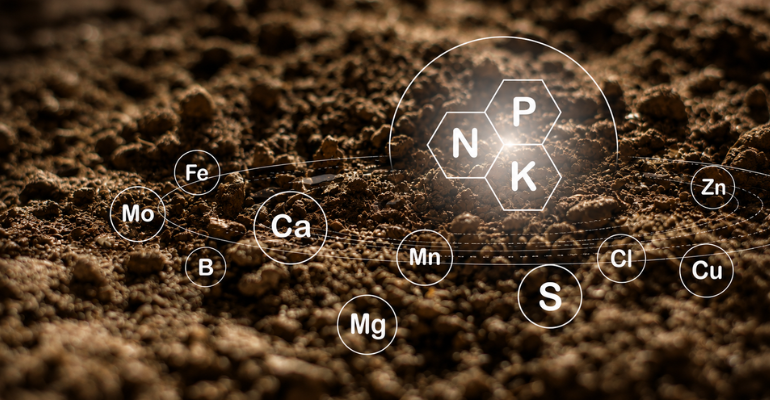
The global economy is witnessing a new era in which critical minerals have emerged as strategic resources determining the future of energy, technology, industrialisation, and geopolitical competition. Minerals such as lithium, cobalt, nickel, graphite, copper and rare earth elements are not only commodities, but essential components for electric vehicles, renewable energy systems, semiconductors, digital technologies, batteries and advanced manufacturing. As countries accelerate their transition towards low-carbon economies and digital transformation, ensuring reliable and sustainable access to critical minerals has become a central priority for global economic governance.
The G20 Critical Minerals Framework: Origins and Guiding Principles
G20 countries, representing about 85 per cent of global GDP and a major share of international trade, are uniquely positioned to address the challenges and opportunities faced by countries in the field of critical minerals. For G20, the goal has shifted from securing supply chains for industrialised nations, to creating a fairer global mineral market where resource-endowed developing countries can maximize their economic gains.
The G20 Critical Minerals Framework acknowledges that producer countries, especially in Africa, Asia and Latin America, often face challenges like limited investment, insufficient processing capacity, infrastructure gaps and unequal participation in downstream value chains.
Released during the South African presidency of G20 in 2025, the G20 Critical Minerals Framework is defined as a "voluntary, non-binding, cooperative blueprint to ensure that critical mineral resources become a driver of prosperity and sustainable development." The guiding principles of the framework include:
- Sustainable Development, Management and Usage;
- Multilateralism and international cooperation in support of Local Beneficiation, Value Addition and Economic Diversification;
- Inclusive and Equitable Participation;
- Transparency and Governance;
- Stable, Resilient and Diversified Value Chains;
- Circularity and Resource Efficiency;
- Innovation and Technology; and
- Alignment with sustainable development objectives
The pillars of the framework include Mapping and Exploration; Governance, Regular Standards on Economic, Social and Economic Aspects; Investment, Value addition and Local Development; Stable, Resilient and Diversified Value Chains; Innovation, Circularity and Technology; and Skills, Capacity and Knowledge Exchange.
Historically, many mineral-rich countries have been dependant on export of raw materials and import of higher-value manufactured goods, thereby limiting their industrial development, job creation and technological progress. The emerging critical minerals economic scenario offers an opportunity to change this paradigm by promoting local beneficiation, processing and manufacturing. The G20 Critical Minerals Framework emphasises that critical minerals should drive industrialisation and sustainable development rather than just serve as export resources.
Challenges Facing Developing Countries
The shift towards clean energy technologies has significantly increased demand for critical minerals. Solar panels, wind turbines, electric vehicles, energy storage systems and hydrogen technologies depend on mineral inputs. There is an acknowledgement that the global energy transition cannot be achieved without secure and sustainable mineral supply chains.
The clean energy evolution also reveals development challenges. Many developing countries have substantial mineral reserves but lack the technology, infrastructure and investment needed to move beyond extraction. Africa, despite its significant reserves, bears the risks of continuing as a raw material supplier unless global cooperation supports refining and manufacturing.
A successful energy transition must therefore be both green and inclusive. Sustainability cannot be separated from economic development. The future of critical minerals governance must ensure that mining communities benefit through employment, skills development, infrastructure creation and improved livelihoods.
G20's Role in Creating Resilient Supply Chains
One of the biggest challenges facing the global critical minerals sector is supply chain concentration. A limited number of countries dominate mining, processing and refining capacities for several critical minerals. Such concentration creates vulnerabilities arising from geopolitical tensions, trade restrictions, market volatility and unexpected disruptions.
The G20 Critical Minerals Framework addresses this challenge by promoting diversified, resilient and transparent supply chains. It encourages international cooperation, open trade, investment partnerships and regional processing hubs. The goal is to create a mineral ecosystem that benefits both producers and consumers while reducing vulnerabilities.
An Agenda for G20 Countries
Diversification beyond alternative sourcing: G20 countries should recognize that resilient critical minerals supply chains require more than identifying new supply sources. They need to actively expand opportunities for developing countries to participate across the full value chain, from exploration and mining to processing, recycling, and manufacturing. This approach links supply security directly to sustainable development outcomes rather than treating them as separate goals.
Shifting from extraction to value creation: G20 governments and institutions should provide developing countries with the technical, financial, and infrastructural support needed to establish refining facilities, battery manufacturing, renewable energy equipment production, and broader technology ecosystems. Moving beyond a purely extraction-based model is central to ensuring mineral-rich nations capture a fairer share of the value they generate.
Investing in enabling infrastructure: G20 countries should prioritize investment in transport corridors, energy systems, digital networks, and industrial clusters that allow producer countries to translate mineral wealth into industrial growth. This is especially critical for Africa, and G20 members should support regional value-chain initiatives such as the African Continental Free Trade Area to strengthen manufacturing capacity, technological capability, and economic diversification.
Strengthening governance and environmental safeguards: G20 countries should promote sustainable mining practices, responsible investment standards, transparent transactions, and mechanisms to address illicit financial flows. Care should be taken to address environmental spillovers like excessive water use, land degradation, and biodiversity loss that mining can generate if left unmanaged. Governance and transparency should be treated as foundational to critical minerals development.
Ensuring meaningful participation of affected communities: G20 countries should embed inclusive participation into critical minerals governance, ensuring indigenous peoples, local communities, women, and other vulnerable groups have a genuine voice in decision-making. Capacity building and knowledge sharing with these groups should be treated as essential components of an equitable mineral development model, not optional add-ons.
Integrating technology and innovation: G20 countries should invest in digital technologies, advanced processing methods, and improved recycling systems that reduce environmental impact and strengthen supply security throughout the mineral lifecycle from exploration through end-of-life recovery. Emphasis should be placed on circularity, including the recovery of minerals from batteries and electronic waste, to reduce dependence on primary extraction and create new economic opportunities.
Facilitating partnerships and knowledge exchange: G20 countries should support structured technology partnerships and knowledge-exchange platforms that help developing countries build domestic capabilities in skills, research capacity, and innovation networks. Access to these resources will determine whether producer nations can participate meaningfully in the future mineral economy, rather than remaining locked into a raw-material-supplier role.
Towards a Just Critical Minerals Future
Critical minerals present both challenges and opportunities for the global economy. They are essential for climate goals, technological advancement and industrial competitiveness. However, the future mineral economy must avoid repeating historical patterns in which resource-rich countries remain raw-material suppliers while value creation occurs elsewhere.
The G20 has an important role in shaping a new model based on partnership, sustainability and mutual prosperity. The Critical Minerals Framework provides a passage towards strengthening supply chains, promoting local value addition, encouraging responsible investment and supporting developing countries in building industrial capacity. However, its success will be measured by mineral availability for the global energy transition as well as the extent to which these resources support inclusive growth, technological advancement and sustainable development. A just critical minerals ecosystem can strengthen a more balanced and resilient global economy.